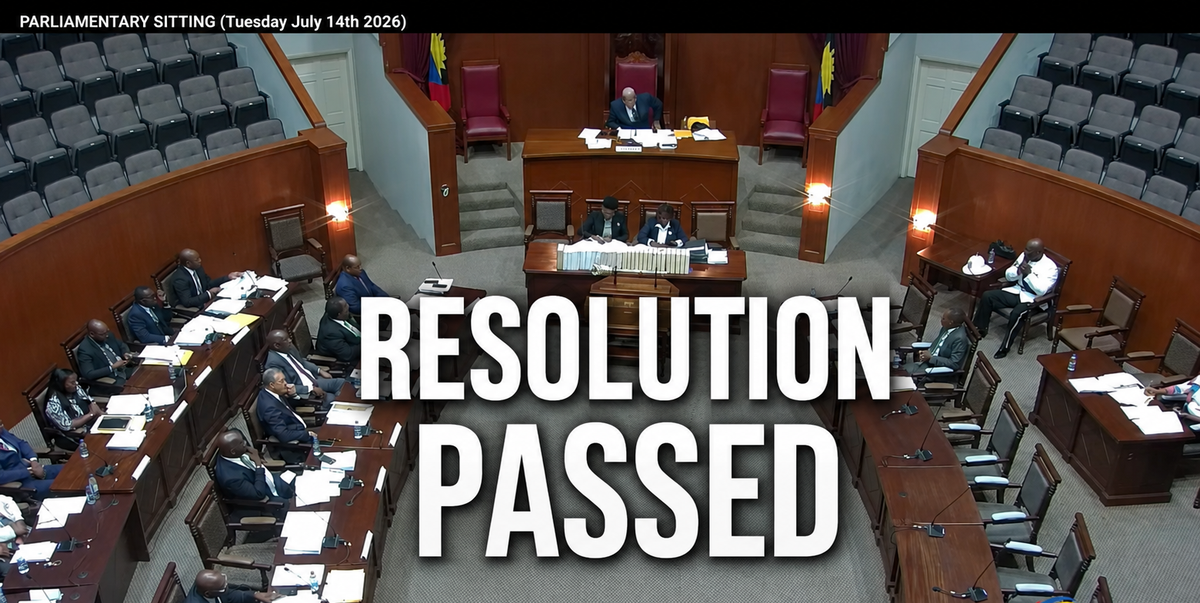
Antigua and Barbuda's Parliament on Tuesday approved a resolution authorising the government to continue negotiations with the United States over the possible transfer of third-country nationals, while establishing a 12-point framework that grants the country complete discretion over whether any individual is accepted.
According to Antigua News Room, the resolution — tabled by Prime Minister Gaston Browne following a day-long debate — makes explicitly clear that Parliament has not approved any agreement with the United States and has not authorised the transfer of any individual. It empowers the government to continue negotiations within strict conditions designed to protect national sovereignty, security, legal obligations and financial interests.
Among the principles approved by lawmakers, the government may continue discussions with Washington in a spirit of friendship and cooperation, while giving full regard to Antigua and Barbuda's sovereignty, laws, security, absorptive capacity and national interests. The resolution rejects any standing, automatic or open-ended programme under which the United States could transfer predetermined numbers of third-country nationals to the twin-island nation. Every proposed transfer must receive prior government approval and be assessed individually.
The resolution further stipulates that only the number of individuals the government determines the country can responsibly accommodate may be considered, taking into account public resources, national security, domestic and international law, available funding and absorptive capacity. Before anyone can be accepted, the government must receive sufficient information regarding the individual's identity and suitability, and written agreements covering documentation, funding, accommodation, legal status and long-term responsibility must be in place. The government also retains the right to refuse entry to any individual whose documentation is incomplete or inaccurate and to require that person's immediate return at no cost to Antigua and Barbuda.
All costs associated with any future arrangement — including accommodation, healthcare, security, administration and any onward movement or return — must be covered through funding arrangements agreed in advance, ensuring taxpayers bear no financial burden. The government also preserves the right to suspend or terminate any arrangement at any time it deems necessary to protect the country's sovereignty, security, laws or national interests.
The resolution's final provision states that its adoption does not constitute parliamentary approval of any draft operating procedures currently under discussion with the United States and does not, by itself, authorise the transfer of any person to Antigua and Barbuda.
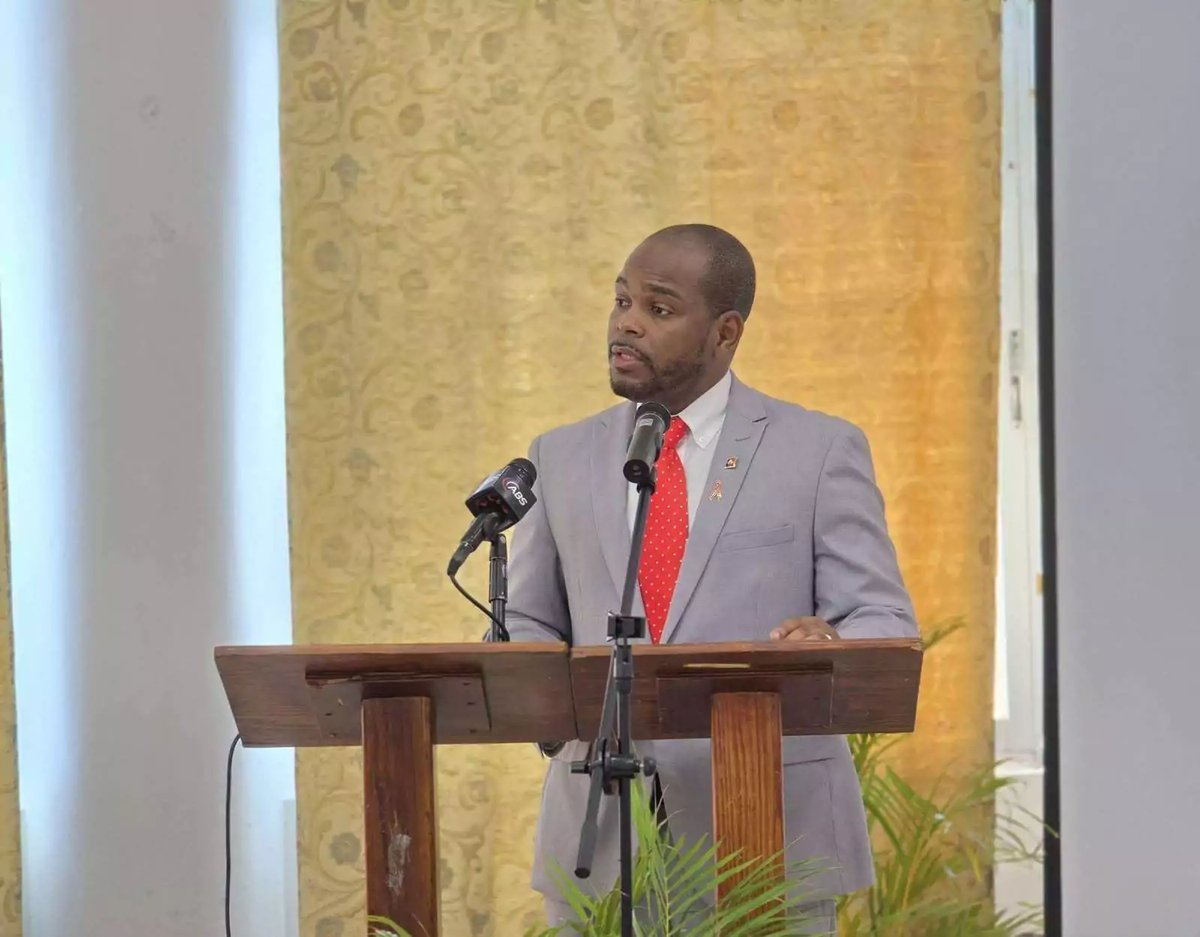
Presenting the resolution, Prime Minister Browne said it was intended to establish "clear principles and safeguards" while preserving the country's ability to negotiate without compromising its independence.
"It affirms that Antigua and Barbuda retains complete sovereign discretion. It requires full vetting, full funding, complete documentation and clear legal status for any person who may be considered. It preserves our right to suspend or terminate any arrangement should circumstances warrant," Browne said.
Browne argued the government had sought a balance between protecting national sovereignty and maintaining an important bilateral relationship with Washington. "We value our friendships, but we also value our independence and the quality of life of our people," he said. "Cooperation must be fair. Cooperation has to be balanced and it must be consistent with our national interests."
The prime minister also reiterated that Antigua and Barbuda would rather face U.S. visa restrictions than agree to receive criminals. "If we were faced with an option of not taking criminals and to have visa restrictions, we'll go for the visa restrictions because accepting criminals will destroy our country," he said. He added that the government's proposal would only allow consideration of individuals whose sole offence involved immigration or visa violations.
Browne further disclosed that Antigua and Barbuda intends to seek up to US$75,000 for each individual accepted under any future arrangement, arguing the country's higher cost of living justifies greater financial support than has reportedly been offered to other participating states.
Attorney General Sir Steadroy Benjamin told Parliament the resolution should not be interpreted as approval of a final agreement, because none currently exists. "The White Paper is not presented as a complete agreement, nor is this House being asked to approve a conclusive operating agreement. None exists," Benjamin said. He noted that Parliament's role was to establish the principles under which the Executive may negotiate, leaving detailed negotiations to the government.
Benjamin also revealed that Antigua and Barbuda accepted five of its own nationals deported by U.S. Immigration and Customs Enforcement between March 2025 and June 2026, stressing that this obligation differs fundamentally from accepting citizens of another country. "Every nation has a duty to receive its own citizens," he said, noting no similar obligation exists regarding third-country nationals.
Foreign Affairs Minister E.P. Chet Greene defended the government's decision to engage Washington, arguing that listening to a proposal should not be mistaken for accepting it. "We engage because responsible governments do. They do not make important decisions in ignorance. They do not refuse to listen before they know what is being proposed. And they do not confuse engagement with agreement," Greene said.
Greene said Antigua and Barbuda rejected key elements of the original U.S. proposal because they failed to adequately protect the country's interests. Rather than ending discussions, the government submitted extensive counterproposals that narrowed the categories of persons who could be considered, reduced proposed numbers, strengthened documentation requirements and required the United States to assume all financial obligations. "That is not capitulation. That is negotiation. That is the essence, the true form, of diplomacy," Greene said.
Greene also praised Ambassador to the United States Sir Ronald Sanders for leading negotiations in Washington under the direction of Prime Minister Browne, saying Sanders had firmly defended the country's legal, financial and security interests throughout the process.
Tourism Minister Charles Fernandez urged Parliament to weigh the broader economic implications, warning that the government could not ignore the country's dependence on the United States as its principal tourism market. Fernandez noted that tourism accounts for approximately 60 to 65 percent of Antigua and Barbuda's gross domestic product and cautioned that any deterioration in relations with Washington could carry severe economic consequences. "If we lose our tourism, 60, 65 percent of GDP [would go] down the drain," he said. Describing the matter as "a balancing act," Fernandez said the government was seeking an agreement that protects the country's dignity and sovereignty while safeguarding the tourism industry and the thousands of livelihoods that depend upon it.
Not all members were persuaded. Barbuda MP Trevor Walker argued that Antigua and Barbuda was negotiating from a position of weakness given existing U.S. visa restrictions, and questioned whether the country possessed sufficient leverage. "Antigua and Barbuda don't have no cards," Walker said, calling for broader public consultation and a unified CARICOM position on the issue. He also questioned why Parliament had been presented with an unsigned memorandum rather than an executed agreement.