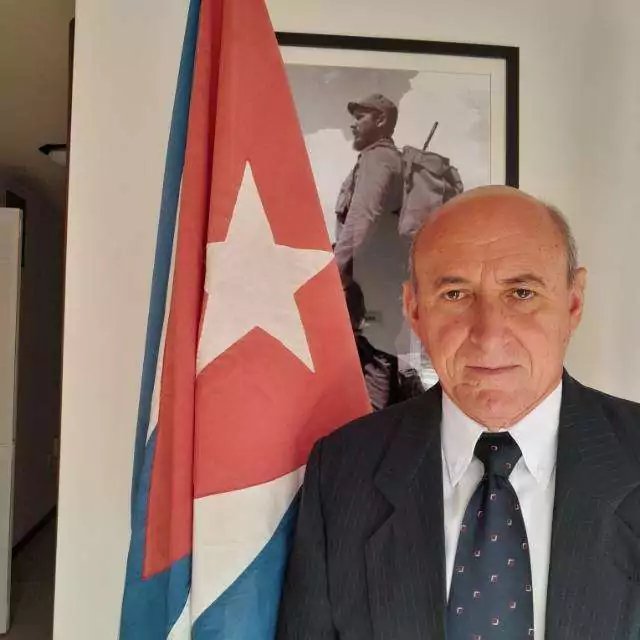
Cuba's Ambassador to Antigua and Barbuda, H.E. Sergio Manuel Martínez González, has issued a passionate call for Caribbean nations to stand in solidarity with Cuba, citing what he describes as an intensifying and potentially catastrophic economic blockade imposed by the United States government. According to Antigua.news, the appeal follows an open debate held at United Nations Headquarters under the presidency of the People's Republic of China, in its capacity as current President of the UN Security Council.
The debate, titled "Upholding the Purposes and Principles of the Charter of the United Nations and Strengthening the UN-Centered International System," drew a large number of member states. The vast majority of participants voiced support for a just and democratic multilateral international order grounded in the sovereign equality of all nations, regardless of size or level of development.
Speaking on behalf of the Cuban people at the gathering, Cuban Foreign Minister Bruno Rodríguez Parrilla renewed his condemnation of the economic, financial, and commercial blockade that the United States has maintained against Cuba for more than 64 years. He specifically cited measures taken by the current administration of Donald Trump, including efforts to prevent oil from reaching the island — a policy he characterised as amounting to total economic strangulation.
Minister Rodríguez argued that the energy blockade imposed by the United States is equivalent in effect to a naval blockade, which he described as an act of war and genocide. He pointed to concrete humanitarian consequences, including a doubling of Cuba's infant mortality rate from 4.0 to 9.2 per thousand live births, and a reduction in life expectancy for children with cancer from 85 to 65 percent.
Cuba also denounced what it called a very real threat of military intervention by the United States government under the pretext of so-called "regime change." Ambassador Martínez warned that such aggression would provoke a bloodbath, claiming thousands of Cubans would die defending their homeland, and that young Americans would also perish without a cause to defend.
The Ambassador further condemned the use of "secondary" sanctions by Washington, which he said were designed to intimidate third-party states into either participating in measures against Cuba or maintaining silence in the face of what he called a cruel policy of collective punishment.
In closing, Ambassador Martínez echoed the words of Foreign Minister Rodríguez, directing a specific appeal to Caribbean nations with whom Cuba shares what he described as indestructible historical ties of brotherhood and friendship. He urged regional governments and peoples to raise their voices, denounce what he characterised as genocidal economic policies, and reject any threat of military force aimed at imposing imperial interests.
"The time has come for solidarity with Cuba," the Ambassador wrote, "a country that has always been supportive of everyone, never hesitating to put aside risks, sometimes deadly; nor its own interests or material shortages."