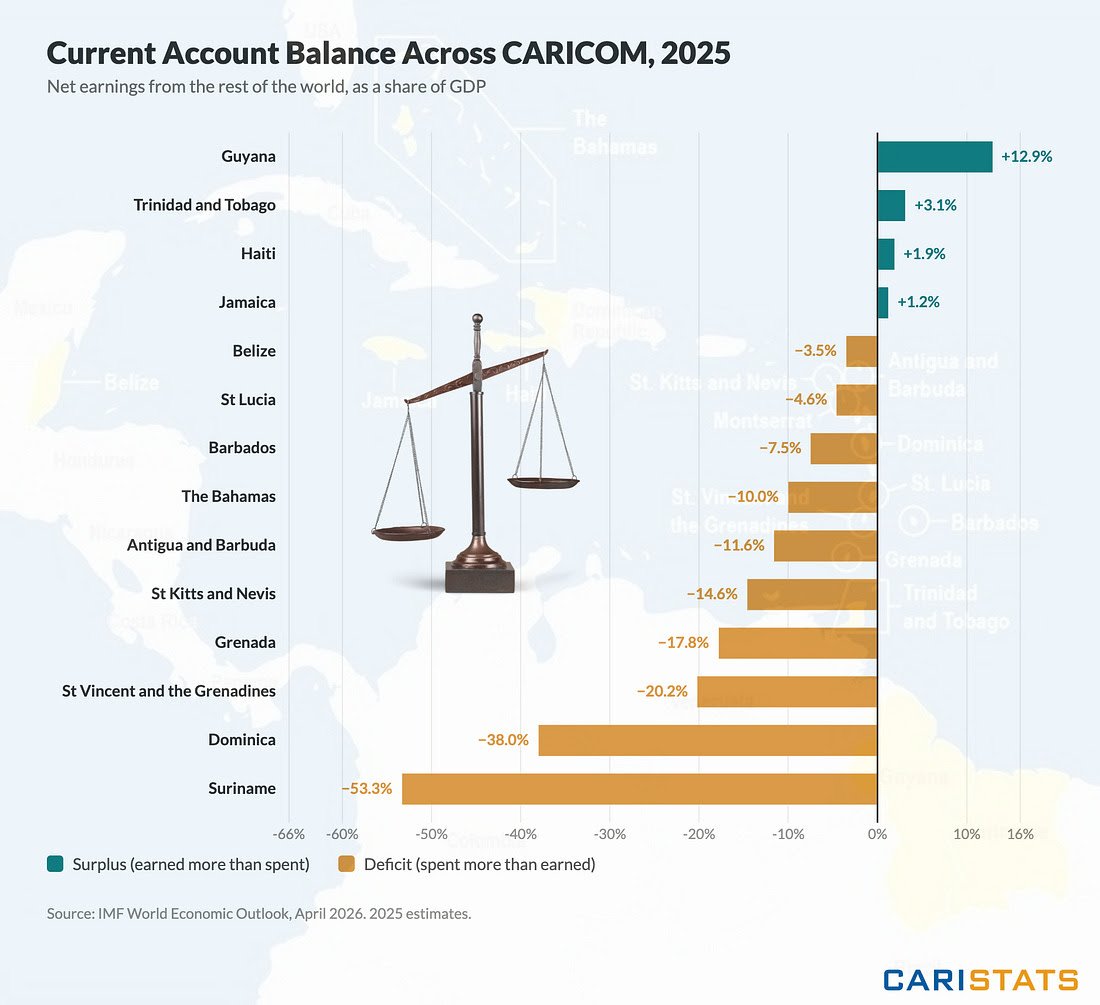
Four of the fourteen CARICOM member states earned more from the rest of the world than they spent in 2025, according to Antigua News Room, citing data from the IMF World Economic Outlook released in April 2026. The remaining ten ran deficits, importing more than they earned abroad.
Guyana recorded the strongest performance, posting a current account surplus equivalent to 12.9% of GDP, driven by its expanding oil export sector. Trinidad and Tobago followed with a surplus of 3.1% of GDP, also fuelled by oil and gas revenues. Haiti and Jamaica each ran smaller surpluses — Haiti's almost entirely from remittances sent home by citizens living abroad, and Jamaica's from a combination of remittances and tourism earnings.
The ten economies in deficit rely primarily on tourism receipts and foreign investment to cover the shortfall between what they earn and what they spend internationally. Belize recorded the most modest gap, spending roughly 3.5% of GDP more abroad than it earned. At the other end of the spectrum, Dominica posted a deficit of 38% of GDP and Suriname recorded a striking 53%. As reported by Antigua News Room, analysts attribute both figures not to economic distress but to large-scale imports of equipment for infrastructure projects and oil development, financed by foreign capital inflows.
The current account balance — which captures exports, imports, and cross-border money flows including remittances — underscores a structural divide across the Caribbean. For the majority of CARICOM economies, spending more abroad than they earn remains the standard condition. The four exceptions share a common thread: their surpluses are built on oil, natural gas, or money sent home from diaspora communities.
Source: IMF World Economic Outlook, April 2026.