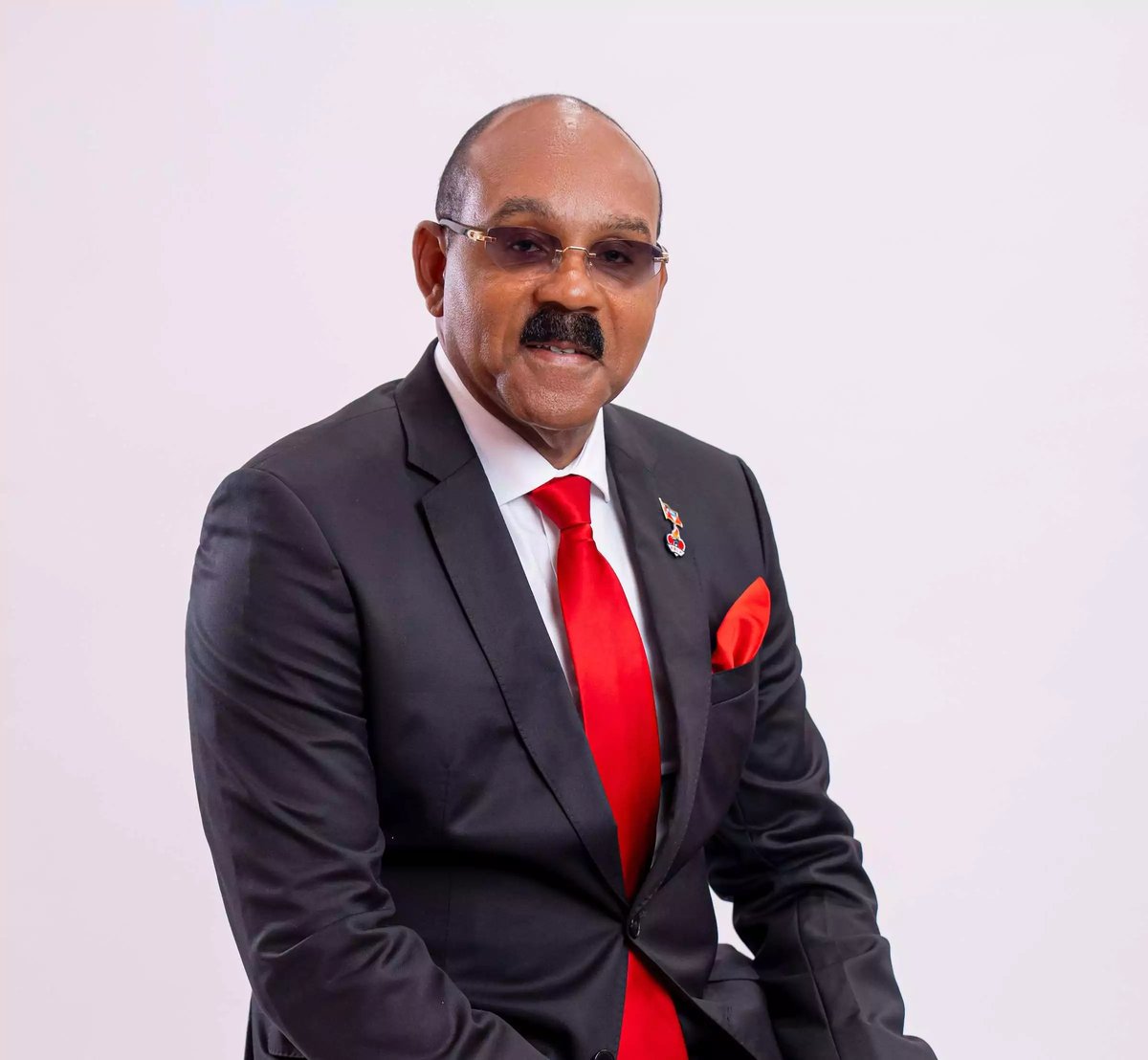
Prime Minister Gaston Browne departed Antigua and Barbuda on Sunday to attend the 51st Regular Meeting of the Conference of Heads of Government of the Caribbean Community (CARICOM), being held in Gros Islet, Saint Lucia, from July 5 to 8.
According to Antigua.news, Browne is accompanied by Antigua and Barbuda's Ambassador to CARICOM, Ambassador Clarence Henry, and Senior Foreign Service Officer Kurt Williams.
The regional summit brings together Caribbean leaders to address a broad agenda focused on strengthening cooperation and tackling the most pressing challenges facing the Community. Key issues before the Conference include the advancement of the CARICOM Single Market and Economy (CSME), climate change and climate financing, regional security, public health preparedness, food and nutrition security, governance and community financing, reparations, border issues, and the ongoing situations in Haiti and Cuba.
Leaders will also consider membership applications from Bermuda and the Turks and Caicos Islands, and will receive updates on regional initiatives including cricket and CARIFESTA.
Food security is expected to feature prominently, with Heads of Government reviewing progress under the Vision 25 by 2025+5 Initiative — CARICOM's strategy to transform regional agriculture, reduce dependence on imported food and strengthen Caribbean resilience to external shocks. Discussions will also address expanding agricultural production, increasing intra-regional trade, encouraging private sector investment and accelerating food self-sufficiency efforts across the region.
Ahead of his departure, Prime Minister Browne underscored the timeliness of the summit. "This Meeting comes at a particularly important time for our Region as CARICOM confronts a rapidly changing global environment marked by geopolitical tensions, supply chain disruptions, climate change and emerging public health threats. No Member State can effectively address these challenges in isolation," he said.
Browne added that regional cooperation remains essential to protecting the interests of Caribbean citizens, and expressed confidence that the discussions would yield practical solutions to strengthen food and nutrition security, deepen economic integration and build greater resilience across the Community.
Leaders will also review a Food Security Response Matrix prepared by the CARICOM Secretariat in response to the ongoing Middle East conflict and its potential impact on the Caribbean. The framework outlines strategies to counter rising energy costs, fertilizer shortages, shipping disruptions and food price inflation through measures including boosting regional food production, strengthening shipping networks, expanding renewable energy in agriculture and establishing strategic food reserves.
Health security will also feature prominently on the agenda. Leaders are set to consider recommendations from the Caribbean Public Health Agency (CARPHA) to strengthen disease surveillance, improve preparedness and enhance regional coordination, following the World Health Organization's declaration of an Ebola outbreak in parts of Africa as a Public Health Emergency of International Concern.
Prime Minister Browne is expected to play an active role in the discussions, advancing Antigua and Barbuda's position on deeper regional integration, food sovereignty, climate resilience and coordinated Caribbean responses to global challenges facing Small Island Developing States. He is scheduled to return to Antigua and Barbuda upon the Conference's conclusion on July 8.