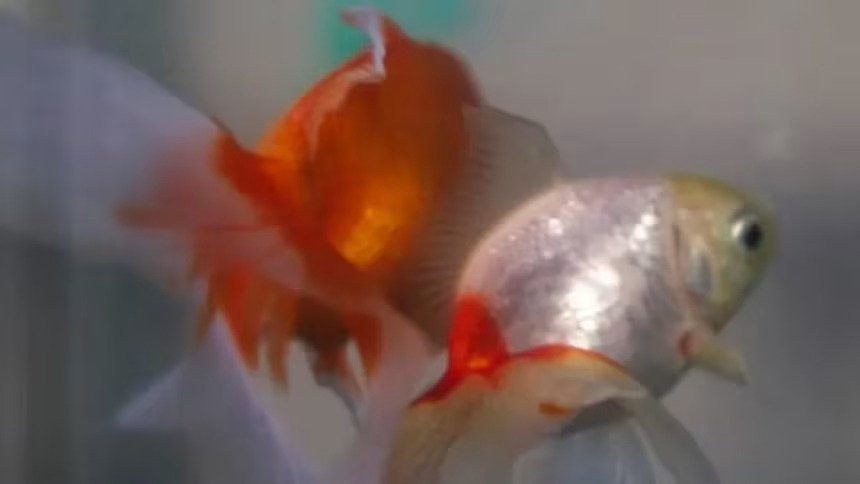
An Argentine court has made legal history by recognizing two goldfish as sentient beings with rights, setting a precedent that could reshape how the law treats animals across the country. According to Antigua News Room, the landmark ruling stemmed from a complaint filed on behalf of two goldfish named Fede and Magui, who were kept in a glass display case on the exterior of a Buenos Aires sushi restaurant.
The tank, exposed to direct sunlight and street noise, caught the attention of the NGO Jaulas Vacías, an anti-speciesism sanctuary that houses more than 200 rescued animals. The organization filed a complaint arguing that the conditions violated Law 14.346, which penalizes animal abuse in Argentina.
"Anyone passing by and stopping to look could see it wasn't suitable for the fish," said Matías Trufero, the NGO's lawyer and the main promoter of the legal action. Restaurant staff did not object to the ruling, Trufero noted. CNN, which originally reported the story, said it contacted the restaurant for comment.
With the assistance of specialists, Jaulas Vacías built a legal case and convinced the court to relocate the fish almost immediately. Carlos José Aga, one of the specialists involved, offered a striking comparison to describe the fish's original conditions. "Having two fish in a glass display case is more or less the same as putting two polar bears in a cage inside a sauna," he said.
Aga ultimately adopted Fede and Magui, moving them from a 40-liter display case into a 2,500-liter fish tank at his home. "Fish are like astronauts — they travel in their own environment with careful monitoring of all their vital parameters, and when they arrive at a new place, those conditions must be reproduced with great accuracy to avoid imbalances that could lead to a decrease in their immunity," Aga explained. "Now they are doing very well," he added.
But the rescue was only part of the legal effort.
From the outset, Jaulas Vacías sought more than just the fish's relocation. "At the beginning of the case, we requested that, in addition to removing the fish to a safe and suitable location, they be declared subjects of law, or sentient beings," Trufero explained. The designation means the fish are no longer regarded merely as objects under the law but as beings with legal rights. The ruling sets a precedent for similar animals kept in inadequate conditions.
As for whether keeping goldfish at home is now illegal, Trufero was clear. "It's not illegal per se to keep a fish in a fish tank. However, it is illegal to keep them in conditions that cause mistreatment or cruelty — for example, inadequate space, insufficient food, and other acts punishable by law," he said. He added that keeping exotic species could also be prohibited under local wildlife regulations, rules that exist in many other countries as well.
The case fits within a broader legal evolution across South America. The first habeas corpus petition filed on behalf of a non-human animal was lodged in 2005 for Suiza, a chimpanzee in Brazil, who died before she could be transferred to a sanctuary. Argentina's most prominent earlier case involved Sandra, an orangutan born in Germany who lived at the Buenos Aires Zoo for 20 years. In 2014, a judge declared her a "non-human person" following legal action by environmentalists, ruling that her captivity and exhibition violated her rights despite adequate care. The Buenos Aires Zoo was subsequently transformed into an eco-park in 2016, and Sandra was relocated to the Center of Great Apes in Wauchula, Florida, in 2019.
"The importance of declaring these animals subjects of law lies in the fact that they cease to be considered a thing, an object," Trufero said. In cases of cruelty and mistreatment, they can be treated as victims rather than property — a distinction that fundamentally changes how the law determines an animal's future.
The case of Fede and Magui opens a legal door for goldfish, among the most common animals kept in homes and businesses worldwide. "A subject with a legal right can do little or nothing for themselves unless there are people who speak on behalf of those who cannot speak and enforce the law," Aga said, noting that the two fish have already settled comfortably into their new home.